 AI Healing
BlogTherapy Artwork
What Is Therapy Artwork? A Beginner's Guide
By AI Healing
In short
Therapy artwork is creative expression — mandala coloring, affirmation art, ambient visuals — used deliberately to support calm and emotional regulation. It is a wellness practice, not licensed art therapy; even 3–5 minutes a day can become a grounding ritual.
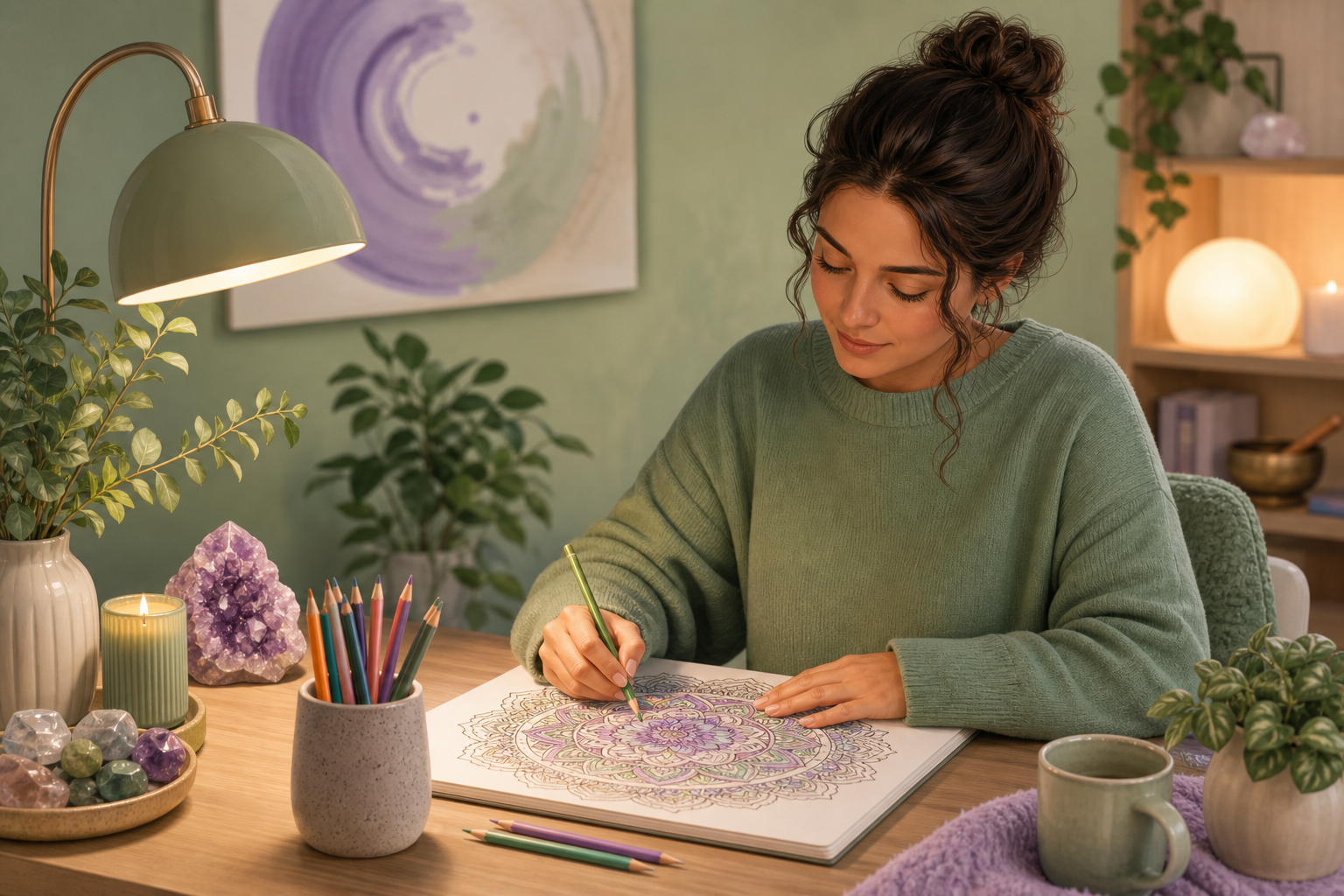
Therapy artwork is creative expression used to support emotional regulation, mindfulness, and a sense of calm. It is not a replacement for professional mental health care — but for many people, the act of making or coloring intentional art becomes a grounding ritual.
What counts as therapy artwork?
Therapy artwork includes mandalas, guided coloring pages, affirmation art, breath-linked visuals, and any creative practice you use deliberately to settle your nervous system. The “therapy” is in the process: slow attention, repetitive motion, and choosing colors that feel safe or uplifting.
Common forms:
- Mandala coloring — radial symmetry gives your eyes and hands a steady focus
- Affirmation art — pairing a calming phrase with decorative lettering
- Ambient visuals — meditative tunnels or geometry you watch while breathing
Why people use it for anxiety relief
Anxiety often pulls attention into the future or into looping thoughts. Therapy artwork pulls attention into the present — the next shape, the next color, the next breath.
Research on coloring and structured art activities suggests benefits such as reduced self-reported stress and improved mood in short sessions. Results vary by person; treat it as a wellness habit, not a medical treatment.
How to start (free, instantly)
AI Healing offers therapy artwork tools you can open instantly:
- Healing Mandalas — Krystal Spiral, Classic, and Golden Ratio templates to color
- Affirmation Generator — turn calming phrases into downloadable art
- Energy Vortex — an infinite zoom meditation visual
Pick one tool, set a five-minute timer, and color or watch without judging the result.
FAQ
Is therapy artwork the same as art therapy?
No. Art therapy is a licensed clinical practice. Therapy artwork here means personal creative wellness — educational and recreational.
Do I need skill or expensive supplies?
No. Our free AI Healing tools work on any phone or laptop. The goal is presence, not perfection.
How often should I practice?
Even 3–5 minutes daily can become a useful anchor. Consistency matters more than session length.