 AI Healing
BlogTherapy Artwork
AI for Therapy Artwork: Creative Tools That Support Calm
By AI Healing
In short
AI for therapy artwork means software that generates mandala templates, color palettes, and affirmation art you can color or display to support calm — it is a creative medium, not a clinician. It helps most with anxiety loops, overwhelm, and restlessness; licensed art therapy remains a separate, clinical practice.
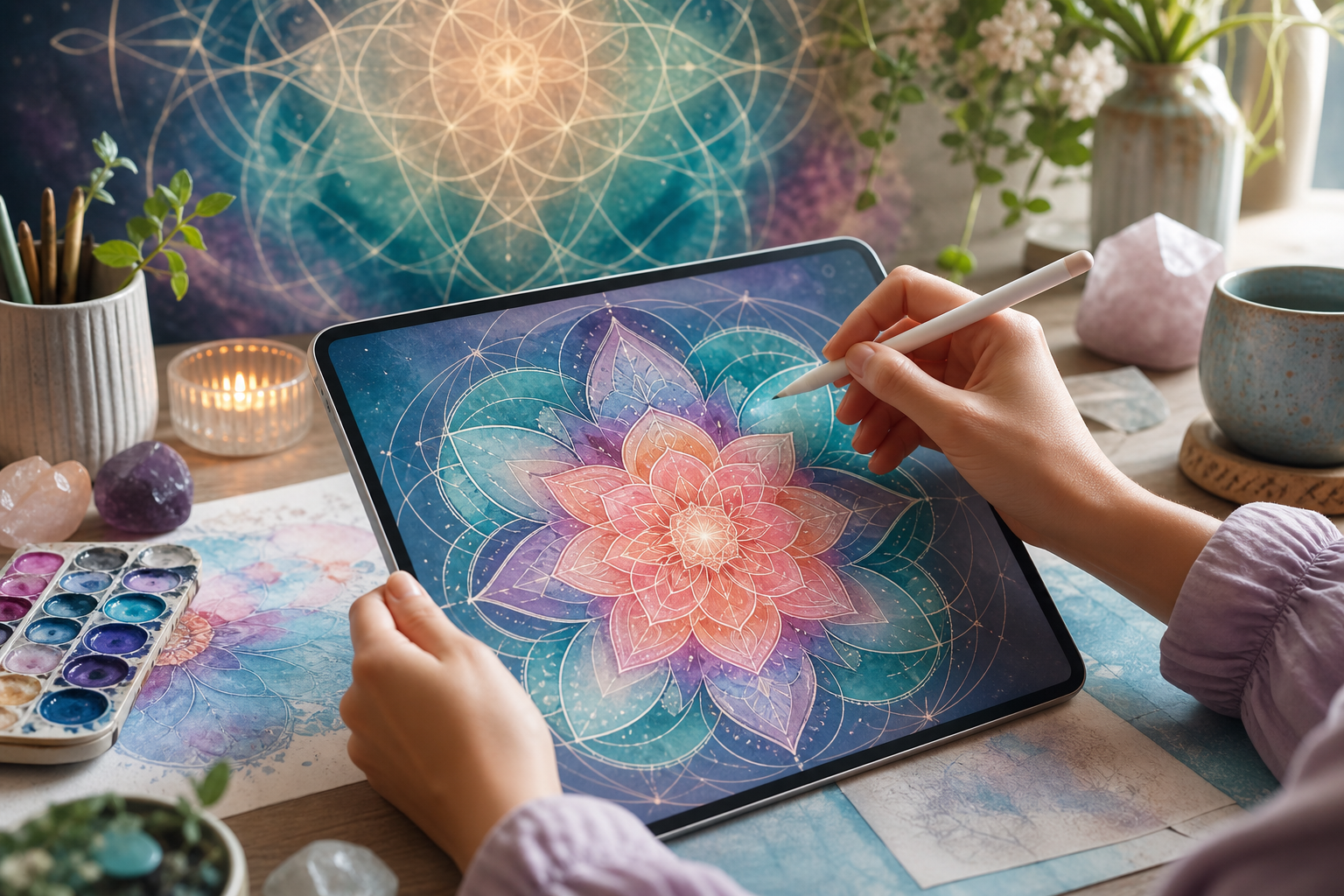
Therapy artwork is not a new idea—people have used drawing, clay, and collage in counseling settings for decades. What is new is the volume of AI-assisted tools that let you generate, color, and share expressive art from a phone or laptop without buying supplies or booking a studio.
“AI for therapy artwork” usually means software that helps you:
- Generate mandala or geometric templates instantly
- Suggest color palettes or symmetry patterns
- Lay out affirmation text in decorative styles
- Save and export images for printing or sharing
It does not mean an algorithm is your therapist. The art is a medium—a way to focus attention, externalize feeling, and slow down.
Why art shows up in mental health conversations
Talk therapy works for many people. Others stall when asked to explain feelings in sentences. Art gives a parallel channel: shape, color, repetition, rhythm.
Common reasons people reach for therapy artwork:
- Anxiety loops that respond better to the hands than to more thinking
- Grief or overwhelm that is hard to name precisely
- ADHD restlessness that needs a structured, visual task
- Quiet evenings when scrolling makes mood worse, not better
Research on structured coloring and mandala tasks often reports short-term drops in self-reported stress. Effect sizes vary; skeptics note placebo and expectancy effects. Still, millions find the practice useful—and low-cost experiments are worth trying if you are curious.
Art therapy vs. therapy artwork apps
Licensed art therapists are trained clinicians. Sessions happen in person or via telehealth with a human who holds ethical duties, confidentiality rules, and a treatment plan. Therapy artwork apps are consumer products. They may borrow visual language from art therapy—mandalas, free drawing, collage—but they do not automatically provide therapy.
That distinction is not snobbery. It is scope. An app can help you feel calmer for twenty minutes. A therapist helps you integrate patterns across months. Both can coexist if labels stay honest.
What AI adds (and what it does not)
Speed. You can open a template library, randomize a pattern, and start filling regions in seconds. No hunting for printable PDFs.
Variation. Golden ratio spirals, classic rosettes, eight-fold Krystal geometry—styles you might not draw freehand.
Accessibility. The app works on phones, tablets, and desktops — including shared or borrowed devices.
Export. Download PNG or SVG, set as wallpaper, print a page for offline coloring.
AI does not interpret your art clinically unless a human professional does that with you. Avoid apps that pretend a palette choice “diagnoses” your trauma. That is marketing, not art therapy.
Practical ways to use AI therapy artwork
Five-minute reset. Pick one mandala, two colors, fill until the timer ends. Stop mid-shape if you must—the point is pacing, not finishing.
Affirmation pairing. Choose a short phrase (“Breathe through it,” “Stay with the breath”) and render it as wavy text art. Place it where you will see it.
Before bed. Low blue light, slow coloring or gentle visuals—not intense social feeds.
With sound. Layer healing frequencies quietly under a coloring session. Keep volume low; protect your hearing.
Share carefully. Exporting art for a private journal differs from posting it publicly for likes. Social validation can help or hurt depending on your mood. There is no obligation to perform healing online.
Materials you do not need anymore
Traditional art therapy rooms stock paper, markers, clay. Digital stacks replace much of that for home use: infinite undo, instant symmetry, palettes you could not afford in physical pigments. The tradeoff is screen time and the temptation to multitask. Full-screen the studio, silence notifications, treat it like a short ritual—not background noise while you argue on Twitter.
AI Healing as an example stack
AI Healing bundles several therapy-artwork angles in one free app experience:
- Healing Mandalas — Krystal Spiral, Classic, and Golden Ratio templates with a full coloring studio
- Affirmation Generator — retro display text you can download
- Energy Vortex — passive geometry for when your hands need rest but your eyes want focus
None of it requires an account. That matters for people who bounce at signup walls.
For a deeper look at the category, see What Is Therapy Artwork? and our guide to AI for mental health more broadly.
Who should skip digital art tools
If creating anything visual triggers perfectionism or self-criticism, mandalas might backfire. Try passive visuals or breath pacing first. If you are in acute crisis, prioritize human and emergency support over a coloring page.
Some people prefer tactile media—real paper and markers—and that is valid. Digital tools are an option, not a moral upgrade. Use whatever keeps you engaged without shame spirals.
FAQ
Is AI-generated mandala art “real” art?
You still choose colors, timing, and attention. The template is digital; the session is yours.
Can I use this in formal art therapy?
Bring exports to a licensed art therapist if you work with one—they can incorporate your images into treatment. The app itself is not a therapist.
What if I am bad at coloring?
There is no grade. Uneven fills and mismatched colors still count as practice if they help you stay present.
Does AI art count as “real” creative work?
The template is generated; your choices of color, pace, and attention are not. Many people hang exports on a wall or use them as phone backgrounds—proof enough that the output meant something to them.
Educational wellness content—not clinical art therapy or medical advice.