 AI Healing
BlogAnxiety Relief
AI for Anxiety Relief: Practical Tools You Can Use Tonight
By AI Healing
In short
AI anxiety-relief tools work best as structured sensory support — breath pacers, calming visuals, and low-volume soundscapes that interrupt a spiral long enough for your body to settle. For acute moments start with a 4-4-4 breath pacer, then switch to a visual anchor like a mandala or vortex; treat open-ended AI chat as experimental, not emergency care.
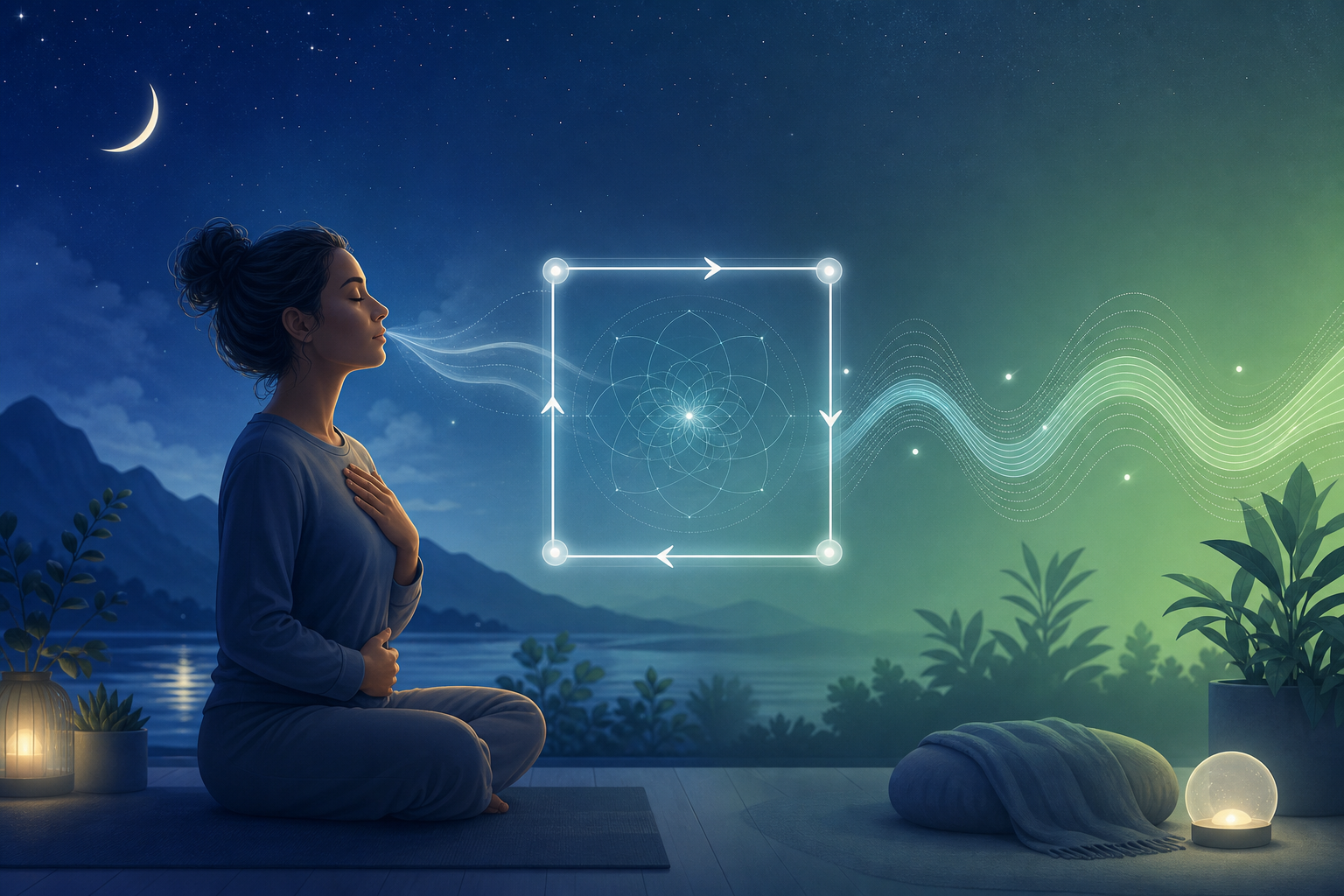
Anxiety rarely announces itself politely. It arrives as tight chest, racing thoughts, doom-scrolling, snapping at someone you love, or lying awake replaying a conversation from 2014. AI for anxiety relief will not fix your life in one session—but the right digital tool can interrupt the spiral long enough to breathe, move, or reach a human who can help.
Think of AI here as structured support: timers, visuals, sound, and language that give your nervous system something predictable to hold onto.
What people mean by “AI for anxiety relief”
The phrase covers several unrelated things:
- Chatbots that reflect or reframe thoughts (quality varies wildly)
- Biofeedback-style apps using phone sensors or wearables
- Breath pacers with on-screen counts
- Sound engines with binaural beats or tonal beds
- Visual meditations—tunnels, mandalas, slow color shifts
- Creative tools—coloring, affirmation art, journaling layouts
For acute panic, simple sensory tools often beat clever conversation. Your body needs rhythm before it needs insight.
How anxiety shows up in the body
Shoulders climb toward your ears. Jaw clenches. Stomach turns. You might feel unreal or detached. Naming those sensations—noticing “this is activation, not danger”—is a skill apps can support with timed prompts, but humans learn it faster with practice than with lectures.
Software helps by externalizing rhythm: the pacer counts so you do not have to. The mandala gives your eyes a job. The audio fills silence that would otherwise fill with rumination.
Techniques that map cleanly to software
Box breathing (4-4-4-4). Inhale four counts, hold four, exhale four, hold four. Military pilots, nurses, and therapists teach variants because the pattern is easy to remember under stress. AI Healing’s breathwork pacer runs the cycle with a mandala backdrop so you are not counting alone in your head.
External focus. Watch an infinite Energy Vortex or color a mandala region instead of arguing with intrusive thoughts. You are not suppressing feelings—you are changing channels until intensity drops.
Affirmation without toxic positivity. Short, believable phrases work better than giant promises. Generate art with the affirmation tool if repeating words helps you anchor.
Sound masking and frequency beds. Low-volume healing music presets can soften a quiet room. Keep levels safe; more volume is not more relief.
What the evidence suggests (briefly)
Breathing retraining, mindfulness practice, and structured relaxation show modest benefits for anxiety symptoms in many studies—effect sizes are not miraculous, but side effects are low when practices are gentle. Digital delivery mainly improves access and consistency, not necessarily the underlying effect size.
Chatbot studies are mixed. Some users feel heard; others get bad advice. Treat open-ended AI chat as experimental, not emergency care.
When anxiety is more than a bad evening
Persistent worry that lasts months, panic that limits work or relationships, substance use to cope, or thoughts of self-harm are signals to seek professional evaluation—not another wellness subscription. AI for anxiety relief works best as hygiene for manageable spikes, not as sole treatment for disorders that need clinical care.
A realistic “bad night” protocol
- Put the phone on Do Not Disturb except one trusted contact.
- Open a breath pacer—six cycles minimum.
- If thoughts still race, switch to visual focus (vortex or coloring) for five minutes.
- Optional: low-volume audio preset like Deep Rest.
- If you feel unsafe, use local crisis resources—not an app.
Repeat what works; skip what does not. Anxiety relief is iterative, not a single hack.
Limits you should respect
AI tools on a consumer wellness site are not emergency services. If you might hurt yourself or someone else, contact emergency numbers or a crisis line in your country immediately.
Medication, trauma processing, and serious mood disorders need licensed care. Apps can support lifestyle hygiene; they do not replace psychiatrists or therapists when illness is severe.
Why instant wellness tools matter for anxiety
Download friction kills help-seeking. When anxiety spikes, installing another app, creating an account, and learning a UI can feel impossible. Something you already saved—open the app, tap Start—removes one barrier.
AI Healing keeps mandalas, breathwork, music, affirmations, and the vortex in one place with no signup. Use it as a kit, not a cure.
Building a personal toolkit over time
Anxiety relief is rarely one trick forever. You might discover box breathing works before meetings, mandalas help Sunday nights, and low tones help you fall asleep. Keep a mental note—or a literal note—of what worked last time. AI apps that remember presets or recent templates reduce decision fatigue when you are already overwhelmed.
Avoid chasing every new app launch. Depth beats novelty. Returning to the same breath pacer ten times teaches your body a cue; hopping between twelve interfaces does not.
FAQ
How fast should I expect results?
Some people feel slightly calmer after one breath cycle. Long-term change usually comes from repeating skills over weeks—not from one viral trick.
Can AI replace medication?
No medical decisions here. Talk to a prescriber if symptoms disrupt work, sleep, or safety.
Which tool should I try first?
If your body feels activated (heart rate up, shallow breath), start with breathwork. If your mind feels loud but your body is wired, try visuals or coloring. If silence hurts, try low-volume audio.
What about caffeine and screens?
Cutting caffeine after noon helps some people sleep; others are fine. Screens are not evil— but doom-scrolling before bed often amplifies anxiety. Swap one scroll session for one breath cycle and notice the difference without moralizing.
Non-clinical wellness guidance—not medical or crisis advice.